

The next decade promises groundbreaking changes as emerging technologies reshape how we work, live, and connect. Business leaders, tech professionals, and curious innovators need to understand these shifts to stay ahead in a rapidly evolving landscape.
Seven key tech trends will define the 2020s and beyond, transforming entire industries and creating new opportunities. We’ll explore how artificial intelligence and machine learning are revolutionizing decision-making across sectors, from healthcare diagnostics to financial services. You’ll discover why quantum computing represents the biggest leap in processing power since the personal computer, potentially solving complex problems that today’s machines can’t handle.
This guide also covers how extended reality technologies are changing human interaction, sustainable tech solutions addressing climate challenges, and the expanding Internet of Things ecosystem connecting billions of devices. Each trend offers specific insights for professionals planning their next career move or businesses preparing for digital transformation.
Artificial Intelligence and Machine Learning Revolution
Automated Decision-Making Transforms Business Operations
Modern businesses are experiencing a fundamental shift as AI systems take over complex decision-making processes that once required human oversight. Companies across industries are deploying sophisticated algorithms that analyze massive datasets in real-time, enabling them to make strategic choices faster and more accurately than ever before.
Financial institutions now rely on AI-driven systems to approve loans within minutes, analyzing thousands of variables including credit history, spending patterns, and market conditions. These systems process applications 24/7, reducing approval times from weeks to mere hours while maintaining higher accuracy rates than traditional manual reviews.
Supply chain management has been revolutionized through predictive analytics that forecast demand fluctuations, optimize inventory levels, and automatically adjust procurement schedules. Retail giants like Amazon use these systems to anticipate customer needs before they even place orders, positioning products strategically across warehouses to minimize delivery times.
Risk assessment has become more sophisticated as AI systems identify potential threats and opportunities that human analysts might miss. Insurance companies now use machine learning algorithms to evaluate claims, detect fraud patterns, and set premiums based on comprehensive risk profiles that consider hundreds of factors simultaneously.
Personalized Customer Experiences Drive Competitive Advantage
The age of one-size-fits-all marketing has ended as AI enables unprecedented levels of personalization across customer touchpoints. Modern recommendation engines analyze individual behavior patterns, preferences, and contextual data to deliver tailored experiences that feel uniquely crafted for each user.
Streaming platforms like Netflix and Spotify have mastered this approach, using viewing and listening history to suggest content with remarkable accuracy. These systems consider not just what users consume, but when they consume it, how long they engage, and what they skip or repeat.
E-commerce personalization has evolved beyond simple product recommendations. AI systems now customize entire website layouts, adjust pricing strategies in real-time, and time marketing communications based on individual engagement patterns. This level of customization has proven to increase conversion rates by up to 30% while significantly improving customer satisfaction scores.
Dynamic pricing algorithms adjust costs based on demand, competitor pricing, and individual customer value, creating win-win scenarios where businesses maximize revenue while customers receive offers aligned with their purchasing power and preferences.
AI-Powered Healthcare Diagnostics Save Lives and Reduce Costs
Medical diagnostics are experiencing a transformation as AI systems demonstrate remarkable accuracy in identifying diseases and conditions that might escape human detection. Radiologists now work alongside AI tools that can spot early-stage cancers in medical imaging with precision rates exceeding 95%.
Pathology labs use machine learning algorithms to analyze tissue samples, identifying cellular abnormalities that indicate various diseases. These systems process samples faster than human pathologists while maintaining consistent accuracy, reducing diagnostic errors that could lead to inappropriate treatments.
Drug discovery has accelerated dramatically through AI-powered molecular analysis. Pharmaceutical companies now use machine learning to identify promising compounds, predict their effectiveness, and simulate clinical trials before investing in expensive human studies. This approach has shortened drug development timelines from decades to years in some cases.
Telemedicine platforms incorporate AI diagnostic tools that help healthcare providers assess symptoms and recommend treatments during remote consultations. These systems analyze patient-reported symptoms, medical history, and vital signs to provide preliminary diagnoses and treatment suggestions.
Smart Automation Eliminates Repetitive Tasks Across Industries
Manufacturing floors have transformed into highly automated environments where AI-powered robots handle assembly, quality control, and maintenance tasks with minimal human intervention. These systems adapt to production changes in real-time, optimizing workflows and identifying potential equipment failures before they occur.
Customer service departments now deploy chatbots and virtual assistants that handle routine inquiries, process returns, and resolve common issues without human involvement. These systems learn from each interaction, becoming more effective at understanding customer needs and providing satisfactory solutions.
Financial services have automated everything from transaction processing to compliance monitoring. AI systems scan millions of transactions daily, flagging suspicious activities and ensuring regulatory compliance while processing routine operations seamlessly in the background.
Human resources departments use AI to screen resumes, schedule interviews, and even conduct preliminary candidate assessments. These systems identify qualified candidates more efficiently than manual reviews while reducing unconscious bias in hiring decisions.
Content creation has been streamlined through AI tools that generate reports, create marketing copy, and produce social media content based on specific parameters and brand guidelines. Marketing teams now focus on strategy and creativity while AI handles routine content production tasks.
Quantum Computing Breakthroughs
Unprecedented processing power solves complex global challenges
Quantum computers operate on principles that defy our everyday understanding of reality. While traditional computers process information in binary bits of 0s and 1s, quantum machines harness the strange behavior of quantum particles to work with qubits that can exist in multiple states simultaneously. This quantum superposition, combined with entanglement between particles, creates computational power that grows exponentially with each additional qubit.
The implications are staggering. Problems that would take today’s fastest supercomputers thousands of years to solve could be tackled in hours or minutes. Climate modeling, for instance, involves countless variables and complex interactions that strain current computing resources. Quantum computers could process these massive datasets with unprecedented accuracy, giving scientists the tools to predict weather patterns, understand climate change impacts, and develop more effective environmental policies.
Financial markets represent another frontier where quantum computing shows immense promise. Portfolio optimization, risk analysis, and fraud detection all require processing enormous amounts of data with intricate relationships. Goldman Sachs and other major financial institutions are already investing heavily in quantum research, recognizing that these machines could revolutionize how they approach trading strategies and market predictions.
Supply chain optimization presents equally compelling opportunities. Companies like Volkswagen and D-Wave have demonstrated quantum algorithms that can optimize traffic flow in real-time, reducing congestion and emissions. Scaling this approach to global supply networks could eliminate inefficiencies that cost businesses billions annually while reducing environmental impact.
Enhanced cybersecurity protects sensitive data and communications
The relationship between quantum computing and cybersecurity creates a fascinating paradox. These powerful machines pose both the greatest threat and the most promising solution to digital security challenges. Current encryption methods, including the RSA algorithm that protects everything from online banking to government communications, rely on the difficulty of factoring large prime numbers. A sufficiently powerful quantum computer could crack these codes with relative ease.
This threat has sparked urgent development of quantum-resistant cryptography. Organizations like NIST are standardizing new encryption methods that can withstand quantum attacks. These post-quantum cryptographic algorithms use mathematical problems that remain difficult even for quantum computers, such as lattice-based cryptography and hash-based signatures.
Quantum key distribution (QKD) represents the cutting edge of secure communications. This technology uses the fundamental principles of quantum mechanics to detect any attempt at eavesdropping. When quantum particles are observed or measured, their state changes in detectable ways. This means that any interception of a quantum-encrypted message leaves unmistakable evidence of tampering.
Countries are already building quantum communication networks. China has constructed a 2,000-kilometer quantum communication link between Beijing and Shanghai, while the European Union’s Quantum Internet Alliance aims to connect quantum computers across the continent. These networks promise unprecedented security for critical infrastructure, government communications, and sensitive business data.
Revolutionary drug discovery accelerates medical breakthroughs
The pharmaceutical industry faces enormous challenges in drug development. Bringing a new medication to market typically costs over $2.6 billion and takes 10-15 years. Much of this time and expense comes from the trial-and-error approach required when working with complex molecular interactions that current computers cannot adequately simulate.
Quantum computers excel at modeling molecular behavior because molecules themselves operate according to quantum mechanical principles. These machines can simulate how potential drugs interact with proteins, predict side effects, and identify promising compounds with remarkable precision. What currently requires years of laboratory testing could be accomplished through quantum simulation in a fraction of the time.
Roche has partnered with Cambridge Quantum Computing to develop quantum algorithms for Alzheimer’s disease research. Their approach focuses on understanding protein folding patterns that contribute to neurodegenerative conditions. Similarly, Merck collaborates with quantum computing companies to accelerate the discovery of new materials for pharmaceutical applications.
Personalized medicine represents another area where quantum computing could make dramatic improvements. By analyzing vast genomic datasets and complex biological interactions, quantum algorithms could help identify treatments tailored to individual patients’ genetic profiles. This precision approach promises better outcomes with fewer side effects, moving medicine away from one-size-fits-all solutions toward truly personalized care.
The COVID-19 pandemic highlighted how quickly quantum computing could contribute to global health challenges. Several quantum computing companies worked on optimization problems related to vaccine distribution and supply chain management, demonstrating the technology’s potential for rapid deployment during health crises.
Extended Reality Reshapes Human Interaction
Immersive virtual workspaces eliminate geographical boundaries
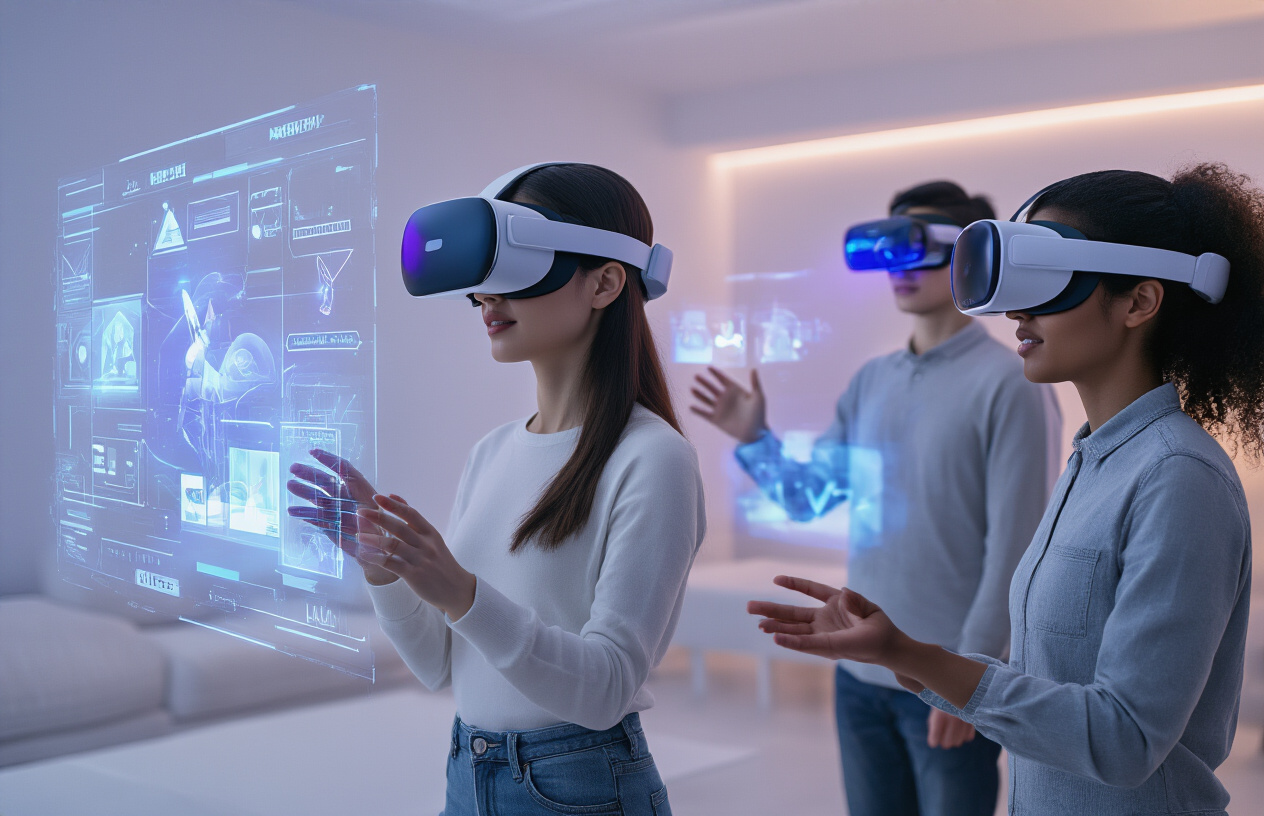
The traditional office is becoming obsolete faster than most companies anticipated. Virtual and augmented reality technologies are creating workspace environments that feel more natural and productive than video calls ever could. Employees can now collaborate in shared 3D spaces where they manipulate digital objects together, draw on virtual whiteboards, and experience genuine presence with their colleagues.
Major corporations like Meta, Microsoft, and Nvidia are investing billions in platforms that replicate the subtle social cues we miss in traditional remote work. These environments capture hand gestures, facial expressions, and spatial positioning, making virtual meetings feel surprisingly authentic. Teams can walk through architectural models together, examine product prototypes from every angle, or brainstorm in customizable digital environments that boost creativity.
The technology eliminates the need for expensive business travel while maintaining the personal connections that drive successful partnerships. A designer in Tokyo can collaborate with engineers in San Francisco and marketing teams in London as if they’re sitting around the same conference table.
Enhanced training simulations reduce real-world risks and costs
Training in high-stakes industries is getting a massive upgrade through extended reality applications. Medical students can practice complex surgeries hundreds of times without touching a real patient. Pilots can experience emergency scenarios that would be too dangerous to replicate in actual aircraft. Construction workers can navigate hazardous situations in complete safety.
The cost savings are substantial. Airlines spend millions on flight simulator training, but VR systems deliver similar experiences at a fraction of the price while offering unlimited scenario variations. Medical schools can provide every student with personalized surgical practice instead of competing for limited cadaver access.
These simulations also accelerate learning curves dramatically. Trainees can repeat procedures until they achieve mastery, receive instant feedback on their performance, and learn from mistakes without real-world consequences. The technology captures detailed performance metrics, helping instructors identify specific areas where students need additional support.
Social connections transcend physical limitations
Extended reality is redefining how we maintain relationships and form new ones. Virtual spaces allow people with mobility challenges, geographic constraints, or social anxieties to participate in social activities they might otherwise miss. Grandparents can attend virtual birthday parties, friends separated by continents can explore digital worlds together, and individuals can express themselves through customizable avatars that reflect their true personalities.
Dating apps are evolving beyond profile photos and text messages. Virtual dates in exotic locations or shared gaming experiences provide deeper insights into compatibility than traditional online interactions. Support groups can meet in calming virtual environments designed to encourage open communication and healing.
The technology also preserves memories in unprecedented ways. Families can record and revisit special moments in 3D, creating digital time capsules that future generations can experience as if they were present. Wedding ceremonies, family reunions, and milestone celebrations gain new permanence through immersive documentation.
Interactive entertainment creates new revenue streams
The entertainment industry is witnessing its biggest transformation since the advent of streaming services. Extended reality opens entirely new categories of content consumption and creation. Audiences can step inside their favorite movies, participate in storylines, and influence narrative outcomes in ways traditional media never allowed.
Musicians are hosting virtual concerts that reach global audiences simultaneously while creating intimate experiences impossible in physical venues. Sports fans can watch games from the player’s perspective, access real-time statistics overlaid on the action, and socialize with other fans in virtual stadiums that never reach capacity.
Gaming revenues are exploding as developers create persistent virtual worlds where players live alternate lives, build businesses, and form communities. These platforms generate income through virtual real estate sales, digital asset trading, and subscription-based experiences that keep users engaged for hours daily.
Virtual tourism opens unexplored destinations
Travel restrictions, physical limitations, and environmental concerns are driving massive growth in virtual tourism. People can explore ancient ruins, climb dangerous mountain peaks, or visit fragile ecosystems without contributing to over-tourism or environmental damage.
Museums and cultural sites are creating detailed virtual replicas that offer access to areas typically closed to the public. Visitors can examine artifacts up close, receive personalized guided tours, and experience historical events through immersive recreations. These virtual experiences often provide richer educational content than traditional visits allow.
The technology democratizes travel experiences that were previously available only to wealthy adventurers. Anyone can swim with sharks, explore space stations, or walk through prehistoric landscapes from their living room, opening new markets for travel companies and content creators.
Sustainable Technology Solutions

Clean energy innovations reduce environmental impact
The global energy landscape is experiencing a massive shift as breakthrough technologies make renewable sources more efficient and affordable than ever before. Solar panel efficiency has jumped dramatically, with perovskite tandem cells achieving over 33% efficiency in laboratory settings, promising to revolutionize rooftop installations and utility-scale solar farms. These advances mean homeowners and businesses can generate more electricity from smaller installations, making solar power accessible even in space-constrained urban environments.
Wind energy continues its remarkable evolution with floating offshore turbines that can operate in deeper waters previously inaccessible to traditional fixed-bottom installations. These floating platforms unlock vast ocean areas for wind generation, particularly benefiting countries with steep continental shelves like Japan and California. Advanced blade designs and AI-powered wind prediction systems now allow turbines to capture energy from lower wind speeds while automatically adjusting to prevent damage during storms.
Energy storage breakthroughs are solving renewables’ biggest challenge: intermittency. Solid-state batteries promise longer lifespans and higher energy density than current lithium-ion technology, while gravity-based storage systems use excess renewable energy to lift massive weights, releasing power when needed by lowering them back down. These innovations ensure clean energy remains available around the clock, eliminating the need for fossil fuel backup systems.
Green hydrogen production is emerging as a game-changer for heavy industries and long-distance transportation. Electrolyzers powered by renewable electricity split water into hydrogen and oxygen, creating a clean fuel that produces only water vapor when burned. Steel manufacturers, shipping companies, and aviation pioneers are investing heavily in hydrogen infrastructure, recognizing its potential to decarbonize sectors where battery technology falls short.
Smart grid systems optimize power consumption and costs
Traditional power grids operate as one-way systems where electricity flows from centralized plants to consumers. Smart grids transform this model into a dynamic, two-way network that communicates in real-time, optimizing energy distribution and integrating renewable sources seamlessly. Advanced sensors and digital controls monitor electricity flow continuously, automatically rerouting power around outages and reducing the cascading failures that cause widespread blackouts.
Demand response programs leverage smart grid capabilities to balance electricity supply and demand more efficiently. During peak usage periods, the system can automatically adjust smart thermostats, delay electric vehicle charging, or temporarily reduce power to non-essential equipment in commercial buildings. Consumers benefit through lower electricity bills while utilities avoid expensive peak power purchases and infrastructure upgrades.
Microgrids are revolutionizing energy resilience for communities, hospitals, and military installations. These localized energy networks can operate independently from the main grid, combining solar panels, battery storage, and backup generators to maintain power during emergencies. Universities and corporate campuses are installing microgrids to reduce energy costs while ensuring critical operations continue during natural disasters or grid failures.
Vehicle-to-grid technology turns electric cars into mobile power sources. When parked, EVs can feed electricity back into the grid during peak demand periods, earning money for their owners while stabilizing the electrical system. This bidirectional flow helps balance renewable energy fluctuations and provides emergency backup power for neighborhoods during outages.
Circular economy technologies minimize waste and maximize resources
Advanced recycling technologies are breaking down complex materials that traditional recycling couldn’t handle. Chemical recycling processes can convert mixed plastics back into their molecular building blocks, creating virgin-quality materials for new products. This breakthrough addresses the massive plastic waste crisis while reducing dependence on fossil fuel-based plastic production.
Industrial symbiosis platforms use AI to identify waste exchange opportunities between companies. One manufacturer’s waste heat can warm another facility, while chemical byproducts from one process become raw materials for different industries. These digital marketplaces are creating unexpected partnerships that dramatically reduce waste streams and resource consumption across entire industrial regions.
Precision agriculture leverages sensors, drones, and satellite imagery to optimize farming practices while minimizing environmental impact. Smart irrigation systems deliver water only where and when needed, reducing agricultural water consumption by up to 30%. Targeted fertilizer application based on soil analysis prevents nutrient runoff that pollutes waterways while maintaining crop yields.
Urban mining technologies extract valuable materials from electronic waste and construction debris. Automated sorting systems use AI and robotics to identify and separate precious metals, rare earth elements, and reusable components from discarded devices. This approach reduces mining pressure on natural resources while addressing the growing e-waste problem in cities worldwide.
Biotechnology is enabling new approaches to material production and waste processing. Engineered bacteria can convert organic waste into biodegradable plastics, while mycelium-based materials grown from mushroom roots create sustainable alternatives to leather and packaging materials. These biological processes operate at room temperature using minimal energy, contrasting sharply with energy-intensive traditional manufacturing.
Internet of Things Ecosystem Expansion

Smart cities improve quality of life for millions
Urban centers worldwide are transforming into intelligent ecosystems that respond to citizens’ needs in real-time. Barcelona’s smart street lighting system automatically adjusts brightness based on pedestrian traffic, reducing energy consumption by 30% while improving safety. Singapore’s comprehensive sensor network monitors air quality, traffic flow, and noise levels across the island, enabling authorities to make data-driven decisions that directly impact daily life.
Traffic management represents one of the most visible smart city applications. Los Angeles deployed adaptive traffic signals that communicate with each other to optimize flow patterns, cutting commute times by 12% and reducing emissions. Amsterdam’s smart parking system guides drivers to available spots using ground sensors, eliminating the frustration of circling blocks and reducing urban congestion.
Water management systems now predict and prevent infrastructure failures before they occur. Copenhagen’s intelligent storm water management uses sensors throughout the city to redirect flood water during heavy rainfall, protecting thousands of homes and businesses. These predictive capabilities extend to waste management, where smart bins signal when they need emptying, optimizing collection routes and reducing operational costs by up to 40%.
Connected healthcare monitors and prevents diseases
Healthcare IoT devices are shifting medical care from reactive treatment to proactive prevention. Wearable glucose monitors continuously track diabetic patients’ blood sugar levels, automatically alerting both patients and healthcare providers when intervention is needed. This constant monitoring has reduced emergency hospitalizations by 25% among users while improving long-term health outcomes.
Remote patient monitoring systems keep elderly and chronically ill patients connected to their care teams without frequent hospital visits. Heart monitors detect irregular rhythms and transmit data instantly to cardiologists, enabling immediate intervention that saves lives. Sleep apnea devices track breathing patterns and adjust pressure settings automatically, improving patient compliance and treatment effectiveness.
Hospital equipment IoT networks prevent critical failures and optimize resource allocation. Smart infusion pumps communicate medication delivery status to electronic health records, reducing dosing errors by 60%. Bed sensors monitor patient movement and vital signs, automatically alerting staff when patients attempt to get up unsafely or when vital signs indicate distress.
Industrial IoT optimizes manufacturing efficiency and safety
Manufacturing facilities are becoming self-aware environments where machines communicate their status, predict maintenance needs, and optimize production schedules autonomously. Predictive maintenance sensors on production equipment detect vibration patterns, temperature fluctuations, and performance anomalies that indicate impending failures, reducing unplanned downtime by 70% and maintenance costs by 25%.
Supply chain visibility reaches unprecedented levels as RFID tags and GPS sensors track materials and products from raw materials to final delivery. Ford’s connected factory systems monitor parts inventory in real-time, automatically triggering reorders when supplies run low and ensuring production lines never stop due to missing components.
Worker safety benefits enormously from IoT implementations. Smart helmets equipped with environmental sensors detect dangerous gas levels in chemical plants, while location tracking systems ensure workers don’t enter hazardous areas during equipment maintenance. Wearable devices monitor worker fatigue and stress levels, preventing accidents caused by human error during demanding shifts.
Home automation enhances comfort and energy savings
Modern homes are becoming responsive environments that learn family routines and preferences while optimizing energy consumption. Smart thermostats like Nest have saved users over $2 billion on energy bills by learning daily schedules and adjusting temperatures accordingly. These systems integrate with other home devices to create comprehensive energy management strategies.
Lighting systems now adapt to natural light levels and occupancy patterns, automatically dimming or brightening rooms based on usage. Smart windows with electrochromic glass tint themselves during peak sunlight hours, reducing cooling costs while maintaining natural light. Voice-activated assistants coordinate these systems, allowing homeowners to control their environment through simple commands.
Security systems have evolved beyond basic alarms to comprehensive home awareness platforms. Smart doorbell cameras recognize familiar faces and alert homeowners to unexpected visitors, while indoor cameras distinguish between pets, family members, and potential intruders. Water leak sensors prevent costly damage by shutting off main water supplies when leaks are detected, protecting homes even when owners are away.
Advanced Robotics Integration
Collaborative robots enhance human productivity
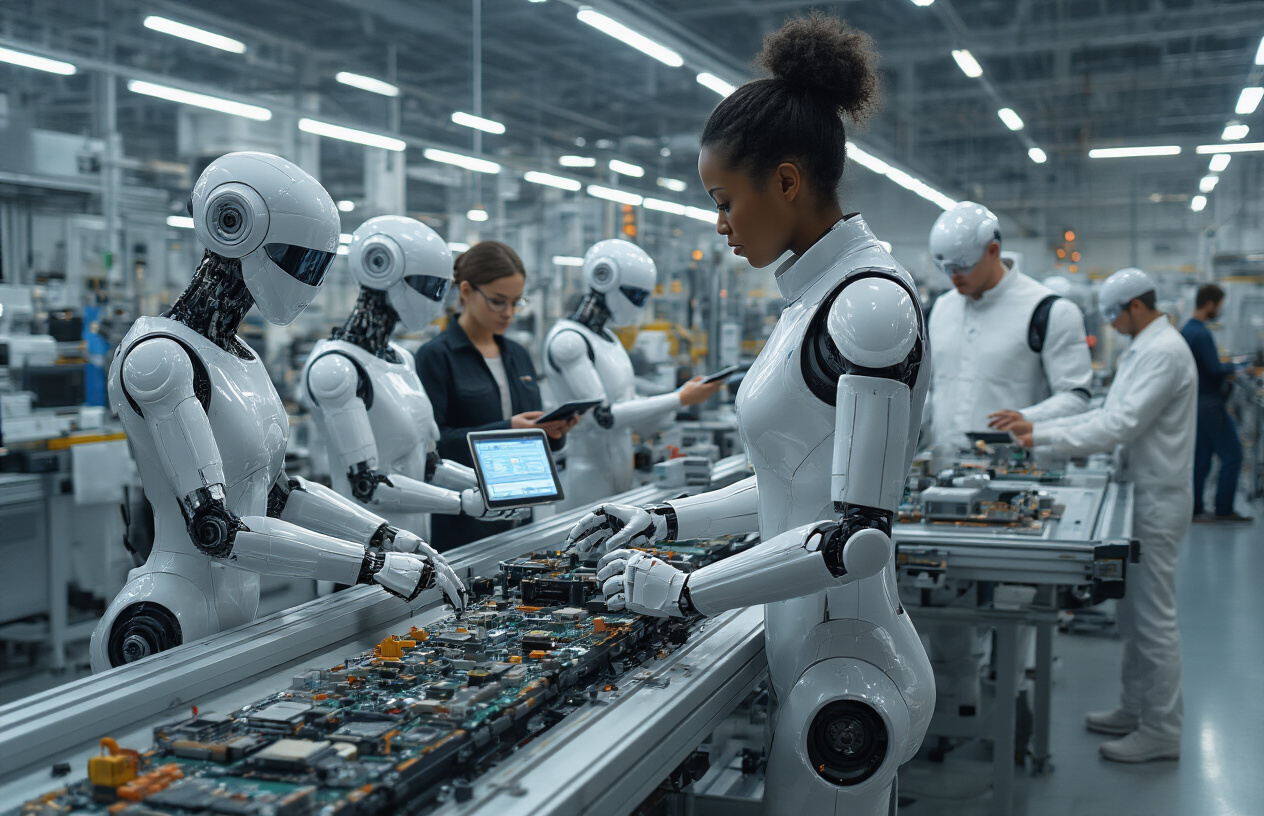
Robots are no longer confined to isolated factory floors behind safety barriers. The new generation of collaborative robots, or “cobots,” work side by side with human workers, creating partnerships that amplify human capabilities rather than replacing them entirely. These machines excel at repetitive, precise tasks while humans handle complex decision-making and creative problem-solving.
Manufacturing floors have become testing grounds for this human-robot collaboration. Cobots handle heavy lifting, precise assembly, and quality control inspections, while workers focus on oversight, troubleshooting, and adaptability. Companies report productivity increases of 30-50% when implementing cobot systems, as these machines work 24/7 without fatigue while maintaining consistent quality standards.
The safety features built into modern cobots make this collaboration possible. Advanced sensors detect human presence and automatically slow down or stop operations when workers come too close. Force-limiting technology ensures cobots can’t apply dangerous pressure, even during malfunctions. These safety measures have reduced workplace injuries in cobot-integrated facilities by up to 60%.
Autonomous delivery systems revolutionize logistics
The logistics industry stands on the brink of a massive transformation as autonomous delivery systems reshape how goods move from warehouses to doorsteps. Autonomous vehicles, drones, and robotic delivery units are creating new paradigms for last-mile delivery, addressing growing consumer expectations for faster, more convenient service.
Ground-based autonomous delivery robots navigate sidewalks and crosswalks in urban environments, carrying packages directly to customers’ doors. These wheeled robots use advanced mapping technology and real-time obstacle avoidance to traverse complex city landscapes. Companies like Amazon and FedEx are already testing these systems in major metropolitan areas, with some achieving delivery success rates exceeding 95%.
Aerial delivery drones represent another leap forward, particularly for rural and hard-to-reach locations. These systems can bypass traffic congestion and geographic obstacles that challenge traditional delivery methods. Medical supply delivery has become a breakthrough application, with drones delivering blood samples, medications, and emergency supplies to remote hospitals and clinics in minutes rather than hours.
Warehouse automation has reached new heights with autonomous sorting and packing systems. These robotic networks can process thousands of packages per hour with accuracy rates above 99.5%, dramatically reducing human error and processing times. The integration of artificial intelligence allows these systems to learn and adapt to new products, packaging requirements, and seasonal demand fluctuations.
Precision agriculture increases food production sustainably
Agricultural robotics are transforming farming practices, enabling farmers to produce more food while reducing environmental impact. Precision agriculture robots equipped with advanced sensors, GPS guidance, and AI-driven decision-making capabilities are revolutionizing crop management from planting to harvest.
Autonomous tractors and field robots can work around the clock, planting seeds with millimeter precision and applying fertilizers or pesticides only where needed. This targeted approach reduces chemical usage by up to 40% while maintaining or increasing crop yields. GPS-guided systems create detailed field maps that track soil conditions, moisture levels, and plant health across entire farms.
Robotic harvesting systems are addressing labor shortages in agriculture while improving efficiency. These machines use computer vision to identify ripe produce and gentle robotic arms to harvest fruits and vegetables without damage. Apple-picking robots can now match human speed while working continuously, and strawberry-harvesting bots achieve picking rates 30% faster than human workers.
Drone technology has become essential for crop monitoring and management. Agricultural drones equipped with multispectral cameras can detect plant stress, disease outbreaks, and nutrient deficiencies before they become visible to the human eye. This early detection capability allows farmers to take corrective action quickly, preventing crop losses and optimizing resource usage.
Elder care robots address aging population challenges
The global aging population has created unprecedented demand for elder care services, and robotics technology is emerging as a vital solution. Care robots are being designed to assist elderly individuals with daily activities, provide companionship, and monitor health conditions, allowing seniors to maintain independence longer while reducing the burden on healthcare systems.
Personal care robots help with mobility, medication reminders, and basic household tasks. These machines can assist with transfers from bed to wheelchair, provide stability during walking, and even help with personal hygiene tasks. Advanced models recognize individual users and adapt their assistance based on specific needs and preferences, learning daily routines and anticipating requirements.
Health monitoring capabilities built into elder care robots provide continuous oversight without being intrusive. Sensors track vital signs, sleep patterns, and activity levels, alerting healthcare providers or family members to concerning changes. Some systems can detect falls immediately and automatically contact emergency services, potentially saving lives through rapid response.
Companion robots address the social isolation that affects many elderly individuals. These AI-powered machines engage in conversations, play games, and provide emotional support. Studies show that seniors who interact with companion robots report reduced feelings of loneliness and improved mental well-being. The robots can also facilitate video calls with family members and remind users of important social activities or appointments.
Blockchain and Web3 Transformation

Decentralized finance democratizes global financial access
Traditional banking systems have long excluded billions of people from basic financial services, but decentralized finance (DeFi) is changing that reality. DeFi protocols built on blockchain networks eliminate the need for traditional intermediaries like banks, creating a permissionless financial ecosystem where anyone with an internet connection can participate.
DeFi platforms already offer lending, borrowing, trading, and investment services without requiring credit checks, minimum balances, or geographical restrictions. Platforms like Compound and Aave allow users to earn interest on cryptocurrency deposits or borrow against their holdings instantly. Meanwhile, decentralized exchanges such as Uniswap enable peer-to-peer trading without centralized control or hefty fees.
The global impact becomes clear when considering that over 1.7 billion adults remain unbanked worldwide. DeFi protocols provide these individuals with opportunities to access capital, build credit histories through on-chain transactions, and participate in global financial markets. Small farmers in Kenya can now secure microloans through blockchain protocols, while freelancers in Southeast Asia can receive instant payments from international clients without expensive wire transfer fees.
Yield farming and liquidity mining have created entirely new income streams, allowing users to earn returns by providing liquidity to decentralized markets. These mechanisms reward participants for contributing to network stability and growth, distributing value more equitably than traditional financial systems that primarily benefit institutional players.
Digital identity solutions enhance privacy and security
Web3 identity systems represent a fundamental shift from centralized identity management to user-controlled, verifiable credentials. Instead of relying on corporations or governments to verify and store personal information, blockchain-based identity solutions give individuals complete ownership over their digital identities.
Self-sovereign identity (SSI) protocols allow users to create verifiable credentials that can be independently authenticated without revealing unnecessary personal information. When applying for a loan, for example, a user could prove their creditworthiness without disclosing their exact income, employment details, or transaction history to the lender.
Zero-knowledge proof technology enhances this privacy model by enabling verification of claims without revealing underlying data. A person could prove they’re over 21 without disclosing their exact birthdate, or demonstrate their vaccination status without sharing medical records. This cryptographic approach protects personal privacy while maintaining necessary verification standards.
Decentralized identifier (DID) systems create persistent, unique identifiers that users control across multiple platforms and services. Unlike traditional usernames tied to specific companies, DIDs remain under user control even if platforms disappear or change their policies. This portability prevents vendor lock-in and gives users true ownership of their digital presence.
Smart contracts automate and secure business transactions
Smart contracts eliminate the need for traditional intermediaries by automatically executing agreements when predetermined conditions are met. These programmable contracts run on blockchain networks, ensuring transparency, immutability, and automatic enforcement without human intervention.
Supply chain management showcases smart contracts’ transformative potential. When goods reach specific checkpoints, smart contracts can automatically trigger payments, update inventory systems, and notify stakeholders. Walmart and other major retailers already use blockchain-based tracking to improve food safety, enabling rapid identification of contamination sources and automatic recalls.
Insurance claims processing becomes dramatically more efficient through smart contract automation. Parametric insurance products can automatically pay out claims based on objective data feeds. Flight delay insurance, for example, can instantly compensate passengers when airline data confirms delays exceeding predetermined thresholds, eliminating lengthy claim review processes.
Real estate transactions, traditionally complex and time-intensive, benefit enormously from smart contract implementation. Property transfers, escrow management, and title verification can occur automatically when contractual conditions are satisfied. This automation reduces fraud risk, eliminates paperwork delays, and significantly lowers transaction costs for buyers and sellers.
Multi-signature smart contracts enhance security by requiring multiple parties to approve transactions before execution. This distributed control mechanism prevents single points of failure and ensures that critical business decisions involve appropriate stakeholders, creating more robust and trustworthy automated systems.

The next decade promises to bring transformative changes that will reshape how we live and work. From AI becoming our everyday partner to quantum computers solving problems we never thought possible, these seven tech trends aren’t just exciting possibilities – they’re the building blocks of our future. Extended reality will change how we connect with others, while sustainable technology will help us tackle climate challenges. The Internet of Things will make our world smarter, robots will handle more complex tasks, and blockchain will revolutionize how we think about digital ownership and transactions.
These technologies won’t exist in isolation – they’ll work together to create new opportunities and solve problems we’re facing today. Start paying attention to these trends now, whether you’re a business owner planning your next move or someone curious about what’s coming next. The companies and individuals who understand and adapt to these changes early will be the ones leading the charge into this exciting new era.